
Forest Dreams
How Songs Can Evoke Characters, Place, and Time

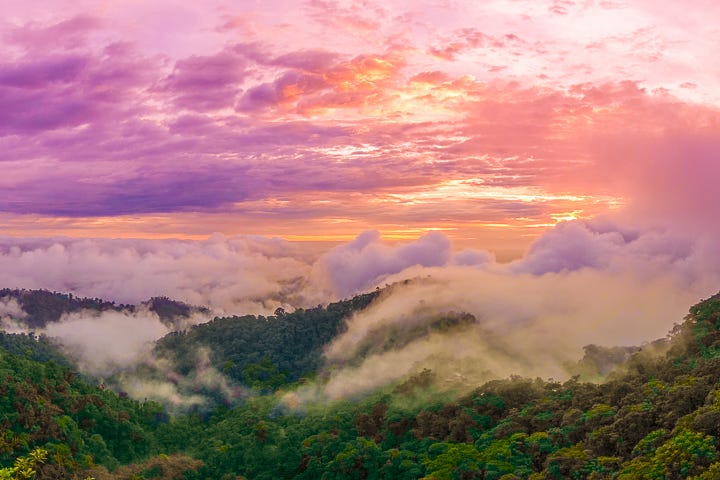
Hello, dear readers and writers. This week we’re diving back into the beauty of grief and love, and how they can be braided into words. Of course, our guide is Mama Nature herself: specifically a cloud forest in the Andes mountains. But we’ll get to that in a moment.
Spending time in nature is a wonderful reminder of how truly awesome this planet we live on really is, and I mean awe in the literal sense, as in a sense of wonder. Nature prompts bring up all kinds of memories and connections, which can open up to narratives about love and gratitude, birth, and of course, death.
Let’s begin with today’s quote: It’s by Anne Frank, from The Diary of a Young Girl. Frank was only thirteen when she wrote these words, and because we know her fate, her writing breaks my heart every time:
The best remedy for those who are afraid, lonely or unhappy is to go outside, somewhere where they can be quite alone with the heavens. . .Because only then does one feel that all is as it should be . . . As long as this exists, and it certainly always will, I know that then there will always be comfort for every sorrow, whatever the circumstances may be.
The prompt this time is, “Song of the Cedars,” by Robert MacFarlane (and a collection of his colleagues and collaborators). McFarlane is a beautiful writer. He has written many books, including, Is a River Alive? in which he questions the ways humans and other animals communicate with nature. The song was inspired by the sounds in an Ecuadorean cloud forest, which has a voice here. You can listen to the song by clicking on the YouTube image below, and you can read the lyrics here.
Song prompts can work in many ways. Perhaps there’s a line or two in the lyrics that evoke writing for you, or the sound of the song itself may resonate with you emotionally. For some of my writers, the song brought up grief, stories of death, dying, and even re-birth. Give it a listen, and see what it evokes for you. What I wrote is below, followed by Mary Oliver’s poem, “Long Afternoon at the Edge of Little Sister Pond.”
What I wrote in response:
What’s the opposite of my city life, the hum of the electric streetcar revving up in the distance, or the thumping music from a souped up purple Honda Civic at the corner stop sign? Is it the branches snapping under the feet of a red fox searching for fallen apples, Black Mountain (in the shape of an elephant) in the distance, the marsh filling with the flow of the tide, then emptying with the ebb? Is it crickets at night, and your quiet voice behind the spare bedroom door, saying goodnight to your boyfriend? In the morning, a walk into the little town where we often retreat, negotiations over peach and ginger scones, the path along the river, a drive to one of the fantastic, nearly empty beaches on the national seashore.
What’s the opposite of forty-five boxes and a $2000 moving truck? One twenty-two inch suitcase and a new light backpack; just enough room for two face masks that we might not get to, a laptop and a journal, a beloved novel that one of us can’t seem to put down. Maybe it’s the Red-tailed Hawk’s nest and the gravel road, so bumpy you have to slow way down, even in your magic white car that I call “my boyfriend.” Because it’s the first smart car that has ever helped me to drive, pulled me back when I’ve gone over the line on the zig-zagging road on the east side of Tomales Bay, heading somewhere I can’t quite remember now. Because all that mattered was you trusted me to get us there and safely back in your new car, the night turning black around us, no city street lights and no other cars on the road. You never dozed off; you didn’t want me to be alone. Played DJ with West African music and taught me a few words in Kreyol. French with a soul. Memory on your tongue. A younger you with no illness to speak of, a whole anticipated long life ahead.
The last time we went to your eternal resting spot, we covered it with flowers (again), we danced to the drummers, and we scooped our hands up into the sky. Fly spirit fly. And again, I saw the path that led to the Golden Gate Recreation Area, and promised myself I would one day take that path past the little mound that is you now. Or are you that hummingbird that was hovering over us? Days later, I am still thinking about this, the flowers, the path, the thrum of her wings, even when a loud skateboard drags by my urban window, even when I enter the freeway and press down hard on the gas.
Long Afternoon at the Edge of Little Sister Pond
by Mary Oliver

As for Life
I’m humbled,
I’m without words
Sufficient to say
how it has been hard as flint,
and soft as a spring pond,
both of these
and over and over,
and long pale afternoons besides,
and so many mysteries
beautiful as eggs in a nest,
still unhatched
though warm and watched over
by something I have never seen
a tree angel, perhaps,
or a ghost of holiness.
Every day I walk out into the world
to be dazzled, then to be reflective.
It suffices, it is all comfort—
along with human love,
dog love, water love, little serpent love, sunburst love, or love for that smallest of birds
flying among the scarlet flowers.
There is hardly time to think about
stopping, and lying down at last
to the long afterlife, to the tenderness
yet to come, when
time will brim over the singular pond, and become forever,
and we will pretend to melt into the leaves.
As for death,
I can’t wait to be a hummingbird,
can you? 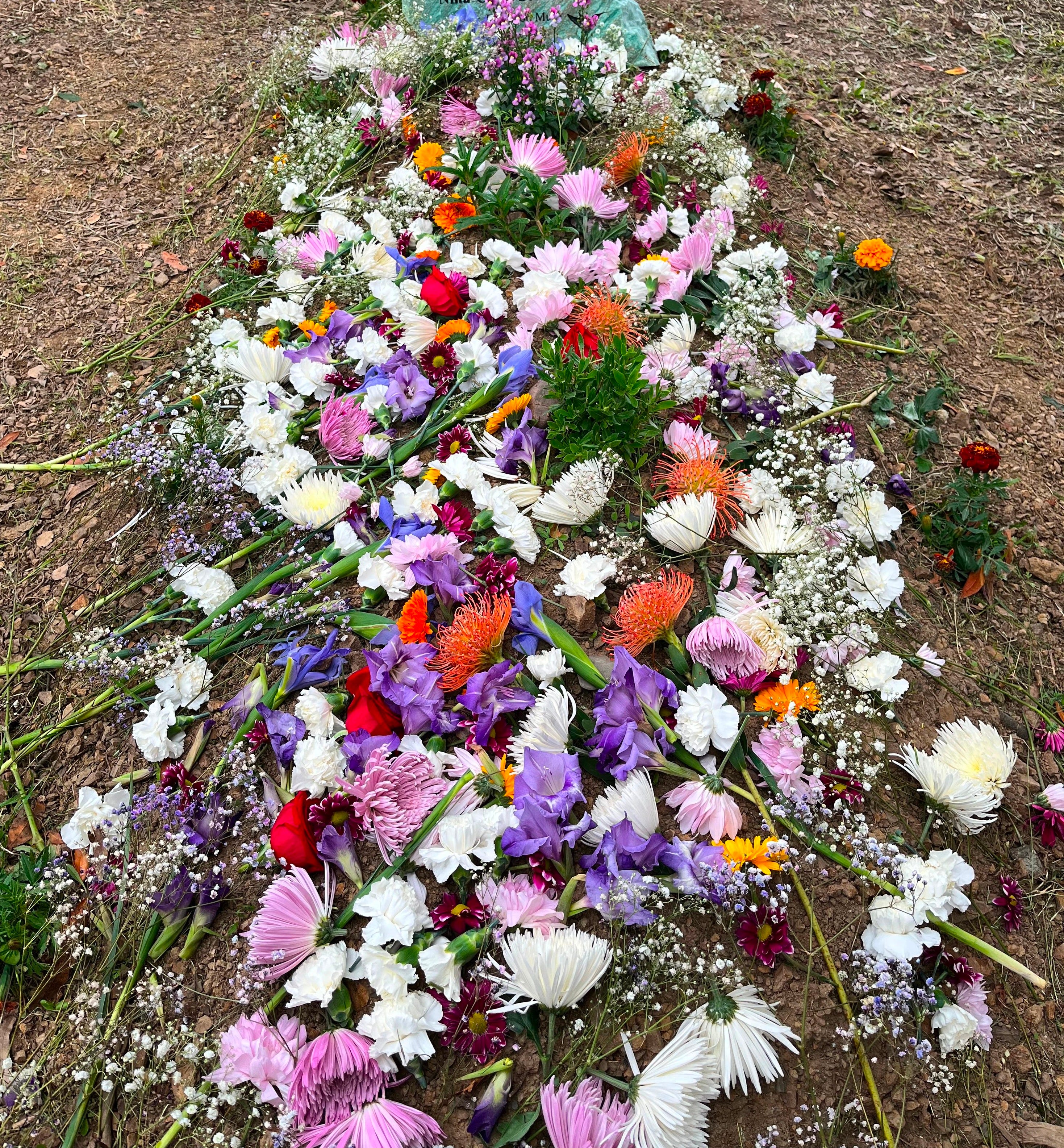
This is so beautiful and heartfelt. So many vivid images.