


Hello, dear readers and writers.
Those of you who’ve read previous posts know that I often use poems as prompts, and this week I’m writing in response to, "The Body Speaks," by Ellen Doré Watson, from her collection, We Live in Bodies.
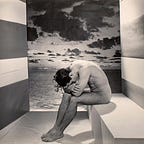
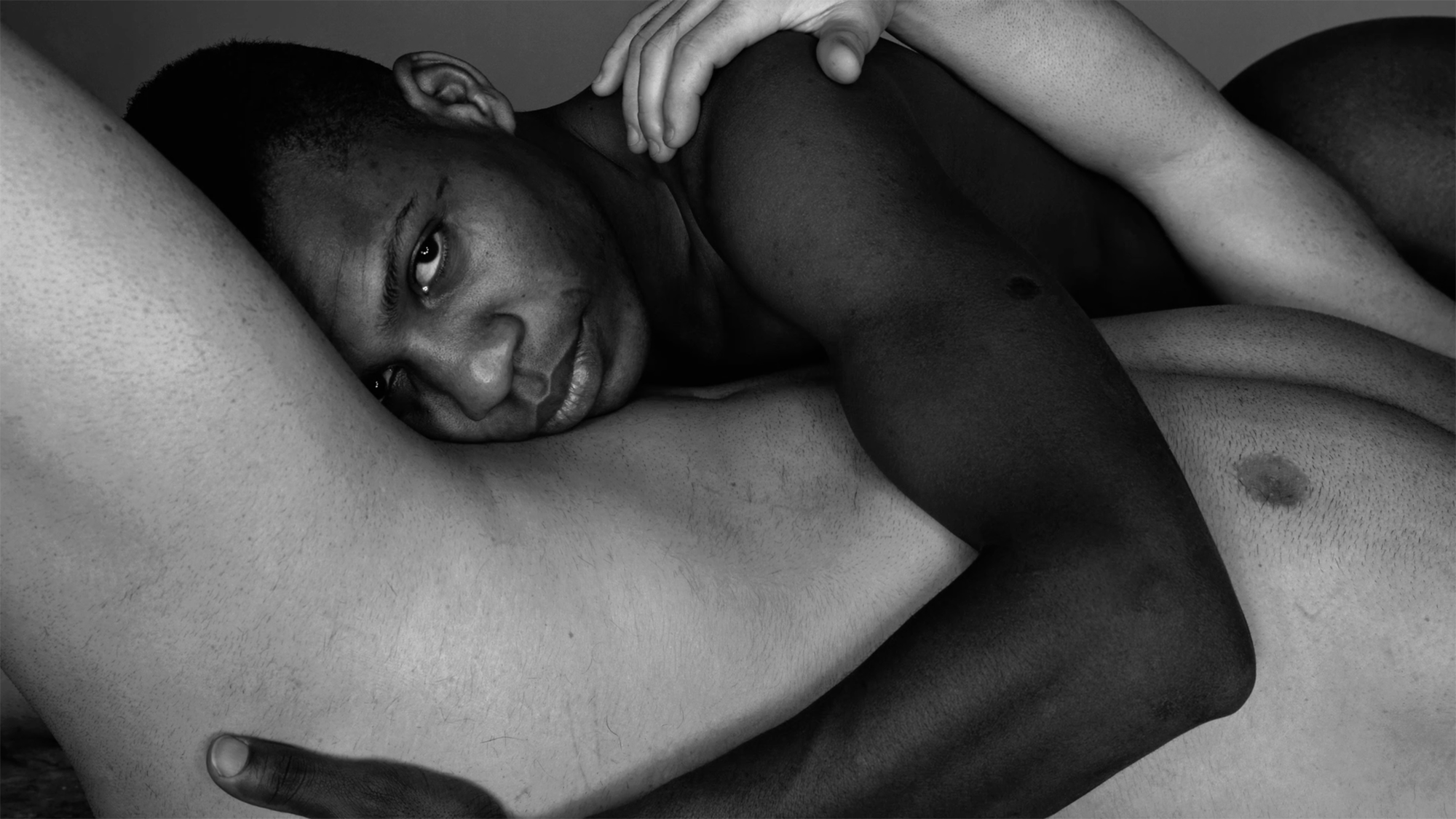
I’ve paired the poem with some images from a photographer I’ve recently discovered, George Platt Lynes (1907-1955). Lynes’ fantastic lighting techniques— and his appreciation of the human form—reveal an artist who was wildly ahead of his time: he used ring lights in the 1920s, and shot naked men when it was literally a crime. You can click on the photo or the caption above to learn more about this amazing artist.
Regarding the poem, I honestly can’t remember who first shared it with me, but I’ve had it for years, and occasionally pull it out and share it with my groups. It’s been particularly transformative for those I’ve written with in my Grief and Healing workshops, as well as cancer survivors (you can find some of their writing here). The beauty of the poem is not only how it reverberates with a kind of forgotten appreciation for these skin suits we live in, but also that it speaks from the body’s POV, and gets our undivided attention.
As always, there’s no right or wrong way to respond to the poem. I often allow the poem to resonate with me, and then write from that place; sometimes there’s an image or a memory that the poem evokes. And sometimes, a few lines from the poem stand out as writing prompts, as they did for me this time around (you can see those above what I’ve written below). You can read the poem yourself, or simply listen to me read it for you. Afterward, I invite you to write for twenty minutes, anything that comes to mind.
Finally, this week you get a two-for-one: Andrea Gibson’s poem, “Tincture” is at the end of this post. If you haven’t seen Gibson’s documentary, Come See Me in the Good Light, check it out.
Meanwhile, keep writing: you inspire me.
The Body Speaks
by Ellen Doré Watson

So? I’m a collection of oversized bones, blind in so much
casing, I’m a pair of lonely shoulders and a snip of a nose
turned up at the word cute. Two serious feet. Lungs
that have sworn off slang, still graced by old graffiti;
fingertips white candles that may never be lit. So what
if this voice has learned how to huddle? This
is a mouth that leads, even on the dance floor.
This is a survivor of a liver, doing cartwheels down the yellow
line. These unmentionable thighs think they’re in the wrong
movie, these are eyes that feast, ears for whispers. Two
nozzles of love that enjoy team sports, and a wet spot
that would rather pay rent than sign papers. The bleached
walnut that thinks it’s in charge keeps dozing off, keeps
to itself, wants to wash its hands of the question mark
—knees to mouth—in the baby space. This is a face
frontal by nature, too little set into too much. A belly
that bleeds for the world while it humps white food
unthinking, and hair that’s easily disappointed. This body
has scars from cats and dogs and scalpels, a throbbing fist
of blood crucial as any other. The wrists alone remain
unchanged, sprouting plain-spoken hands that love
dirt today, satin tomorrow. So? Own it all—the walk-in vanity,
the basementful of self-disgust. As old as peekaboo: I loves me,
I loves me not. Oh how the soul goes on trying to butter up
its wrapper. No choice but to live in this stew of mismatched
parts greased by doubt. Who needs the dumb self-assurance
of glaciers when you have love handles, when you have this
spacesuit for stroking they call skin? So, you know—play
with me. The way you do with words.
Three lines from the poem that stood out to me:
Lonely shoulders
Hands that love dirt today, satin tomorrow
Wants to wash its hands of the question mark
What I wrote is below.
For weeks now, his stomach and his back have been bothering him. I think, He eats like a monk, never smoked, and doesn’t drink. He can’t be dealing with anything serious, can he?
We’re eating a delicious veggie bowl he just prepared, and I’m asking questions like an intake nurse. Stool is normal. No vomiting. Is it a burning pain? I ask. (An ulcer, I think, though he meditates and rarely gets angry). No. A slight nausea. Sometimes accompanied by lightheadedness. His liver, his spleen? Recent blood work showed a healthy body, which I can attest to, since my lonely shoulders now have a regular place to rest.
I’m suddenly twenty-five years younger, and my boyfriend back then is telling me that he’s HIV+. T cells are high, viral load undetectable. But for the first few months after we move in together, I keep thinking, I love him, and he could die. “Well, sure,” said my best friend Dean, who is gone now, but was very much alive then. “We all could die at any time. That’s the risk everyone takes when they love someone.”
Touché, oh very wise one: Dean was never one to shy away from the question marks.
And here I am now, a man old enough to get a 10% senior discount, worrying again about someone I love. This isn’t what he needs, a voice inside me says. Stop adding to his concerns. Stop trying to fix it.
Adrenal failure, I think, comes on and surprises many. One day you’re enjoying champagne, the next you’re on dialysis. And of course, there’s always cancer, lurking around in our large intestines, our tumor blocking cells trying to eat up those nasty little guys before they develop their own blood source. Prebiotics grabbing the “bad” bacteria and making sure the gut stays vital, healthy. And the lymph nodes, those little bumpy balls on strings, flowing from our necks down to our groins. Everything working in tandem to keep us alive and well.
“I’ll see the doctor on the 13th,” he says, taking a big bite of multicolored vegan food and looking down at his bowl. “This is what doctors are for.” Point taken. I’m no doctor. I just don’t know how to love someone and not worry.
I’m working on that with a redheaded mini Dr. Freud on Zoom: how to let go, to trust, to just be present. How to love and lose. (Well, in theory anyway.) But I don’t like this narrative of phantom pains and unexplained nausea. I don’t like it any more than I liked the nonchalance my friend Nina had when her abdomen swelled with what turned out to be ovarian cancer. “I think I’ve just been over eating,” she said, claiming a fat loaf of homemade banana bread as the culprit. Less than five years later, she was gone. “I’m not going anywhere,” I told her when the cancer came back. “I’m here for the whole ride, no matter where it takes us.”
Big words from a brain that sometimes can’t remember the word “tempeh,” and a body that sometimes likes to escape this troubling reality we live in with sexual fantasies, corny TV, and a big fat joint.
Satin or sludge. And everything in between.
Tincture
by Andrea Gibson (1975 –2025)

Imagine, when a human dies,
the soul misses the body, actually grieves
the loss of its hands and all
they could hold. Misses the throat closing shy
reading out loud on the first day of school.
Imagine the soul misses the stubbed toe,
the loose tooth, the funny bone. The soul still asks, Why
does the funny bone do that? It’s just weird.
Imagine the soul misses the thirsty garden cheeks
watered by grief. Misses how the body could sleep
through a dream. What else can sleep through a dream?
What else can laugh? What else can wrinkle
the smile’s autograph? Imagine the soul misses each falling
eyelash waiting to be a wish. Misses the wrist
screaming away the blade. The soul misses the lisp,
the stutter, the limp. The soul misses the holy bruise
blue from that army of blood rushing to the wound’s side.
When a human dies, the soul searches the universe
for something blushing, something shaking
in the cold, something that scars, sweeps
the universe for patience worn thin,
the last nerve fighting for its life, the voice box
aching to be heard. The soul misses the way
the body would hold another body and not be two bodies
but one pleading god doubled in grace.
The soul misses how the mind told the body,
You have fallen from grace. And the body said,
Erase every scripture that doesn’t have a pulse.
There isn’t a single page in the bible that can wince,
that can clumsy, that can freckle, that can hunger.
Imagine the soul misses hunger, emptiness,
rage, the fist that was never taught to curl—curled,
the teeth that were never taught to clench—clenched,
the body that was never taught to make love—made love
like a hungry ghost digging its way out of the grave.
The soul misses the unforever of old age, the skin
that no longer fits. The soul misses every single day
the body was sick, the now it forced, the here
it built from the fever. Fever is how the body prays,
how it burns and begs for another average day.
The soul misses the legs creaking
up the stairs, misses the fear that climbed
up the vocal cords to curse the wheelchair.
The soul misses what the body could not let go—
what else could hold on that tightly to everything?
What else could see hear the chain of a swingset
and fall to its knees? What else could touch
a screen door and taste lemonade?
What else could come back from a war
and not come back? But still try to live? Still try
to lullaby? When a human dies the soul moves
through the universe trying to describe how a body trembles
when it’s lost, softens when it’s safe, how a wound would heal
given nothing but time. Do you understand? Nothing in space can
imagine it. No comet, no nebula, no ray of light
can fathom the landscape of awe, the heat of shame.
The fingertips pulling the first gray hair
and throwing it away. I can’t imagine it,
the stars say. Tell us again about goosebumps.
Tell us again about pain.


